

By Dr. Pravin T. Goud
In assisted reproduction, success is often framed as a matter of technique. Did fertilization occur? Did pronuclei form? Did the embryo cleave? But over the years, my research has repeatedly shown me that when an intervention is performed, its timing can be just as important as how it is done.
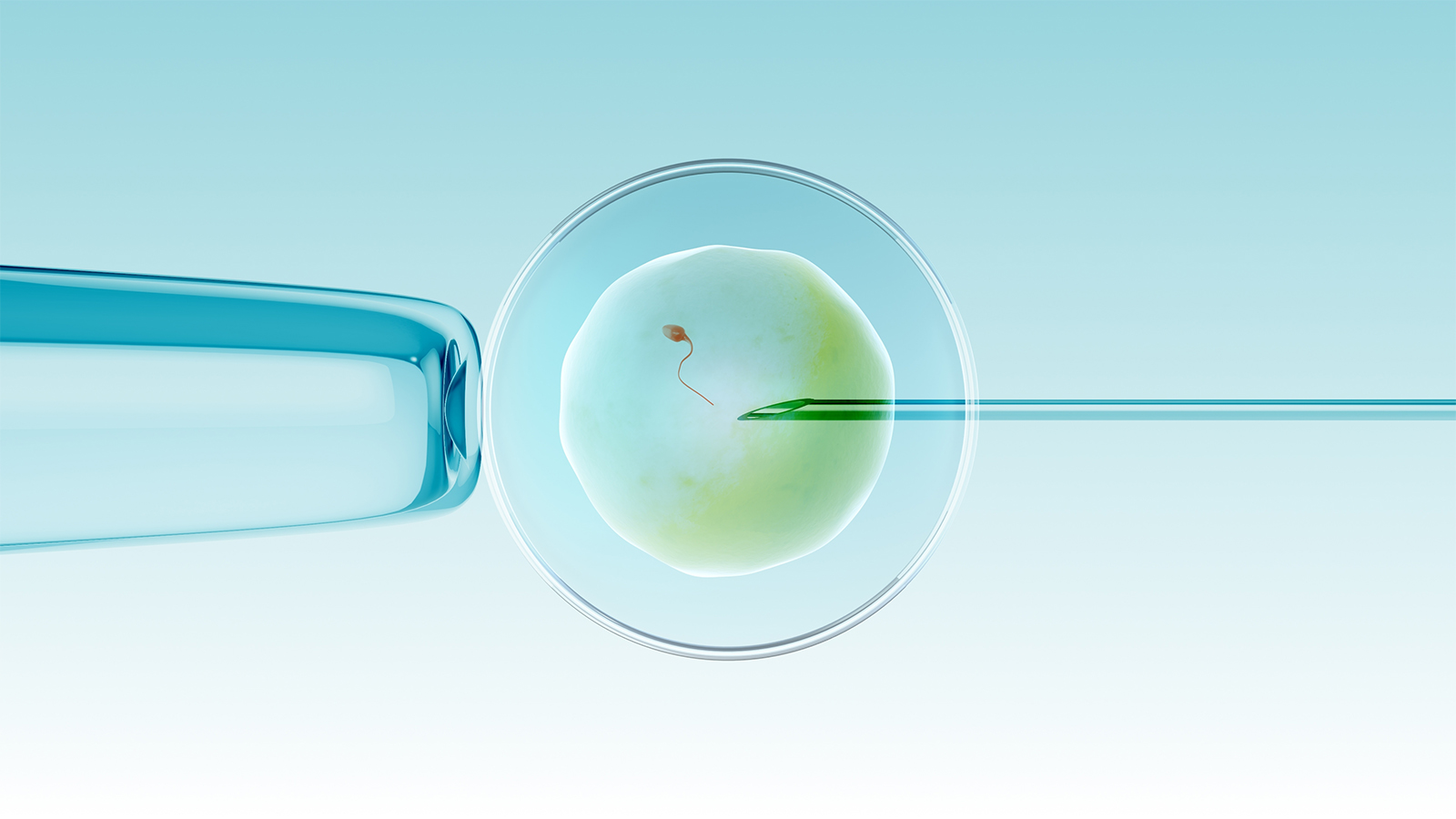
One of the most revealing examples of this came from studying intracytoplasmic sperm injection (ICSI) in human in-vitro matured (IVM) oocytes. On the surface, these oocytes appeared mature and ready. Yet subtle delays—sometimes as short as a few hours—produced dramatic changes in fertilization patterns, pronuclear symmetry, and embryo development.
This work forced me to rethink fertilization not as a binary outcome, but as a time-dependent biological dialogue. When that dialogue is mistimed, even the most advanced technology cannot fully compensate.
Why Pronuclei Matter More Than What We Once Thought
After ICSI, embryologists typically assess fertilization by counting pronuclei. Two pronuclei (2PN) are considered normal. One pronucleus (1PN) or three pronuclei (3PN) are classified as abnormal.
But pronuclei are not interchangeable placeholders. Their size, symmetry, and timing of formation reflect deeper molecular events—particularly the remodeling of sperm chromatin and the synchronization of male and female genomes.
Earlier observations had already suggested that embryos with uneven pronuclear size often show impaired developmental potential. What remained unclear was why this happens and under what conditions it becomes more likely.
Our study focused on a variable that is often underestimated in the clinic: postmaturation aging of the oocyte.
In-Vitro Maturation: Opportunity and Vulnerability
In-vitro maturation offers clear advantages. It allows the use of immature oocytes that would otherwise be discarded and reduces the need for aggressive ovarian stimulation. However, IVM oocytes could have a relatively narrow window to undergo normal fertilization to allow optimal processing of the sperm chromatin narrow window is particularly comes to early embryonic development, linked to expression of critical genes.
We wanted to understand how delaying ICSI after maturation affects fertilization quality in IVM oocytes. Specifically, we asked: Does a short delay increase the risk of abnormal fertilization and pronuclear imbalance?
How the Study Was Designed
We used spare germinal vesicle–stage oocytes donated by patients undergoing ICSI for male-factor infertility. After in-vitro maturation, sibling oocytes were divided into two experimental groups:
- Group 1: ICSI performed soon after maturation (30 hours)
- Group 2: ICSI deliberately delayed by 6 hours (36 hours)
Sibling in-vivo matured oocytes injected in the clinical program served as controls.
Beyond standard fertilization checks, we measured pronuclear diameters with precision and defined pronucleus size asynchrony as a difference exceeding three standard deviations from the control mean. We also followed embryos through the first cleavage division.
In a second set of experiments, we labeled sperm mitochondria with a fluorescent dye to definitively identify the male pronucleus and determine whether size asymmetry originated from the paternal or maternal genome.
What We Observed: Fertilization Is Highly Time-Sensitive
The results were striking.
IVM oocytes injected six hours later showed:
- A significant reduction in normal (2PN) fertilization
- A marked increase in 1PN zygotes
- A sharp decline in cleavage rates
- A dramatic rise in pronucleus size asynchrony
In contrast, oocytes injected soon after maturation behaved much like their in-vivo matured siblings, with high fertilization and cleavage rates.
The implication was clear: postmaturation aging begins quickly, and IVM oocytes are particularly vulnerable to it.
The Meaning Behind One Pronucleus
One of the most common abnormalities in delayed ICSI was the appearance of only one pronucleus. Traditionally, this has been attributed to parthenogenetic activation—where the oocyte activates without incorporating the sperm genome.
Our findings support this interpretation. Postmature oocytes appear more sensitive to even minor activation stimuli, including the injection procedure itself. Once activation occurs prematurely, the oocyte may form a female pronucleus before the sperm chromatin has time to decondense properly.
When this happens, the opportunity for normal male pronucleus formation is lost.
Pronucleus Size Asynchrony: A Subtle but Serious Warning
Among zygotes that did form two pronuclei after delayed ICSI, many displayed pronounced size differences between them. Importantly, this asymmetry was not due to enlargement of one pronucleus, but to marked reduction in the size of the other.
Using fluorescently labeled sperm, we were able to show that the smaller pronucleus was consistently the male pronucleus. This finding was critical.
It told us that postmaturation aging interferes specifically with sperm chromatin decondensation—the process by which tightly packed sperm DNA is unpacked, restructured, and converted into a functional male pronucleus.
Why the Male Pronucleus Is Especially Vulnerable
Sperm chromatin is uniquely compact, stabilized by disulfide bonds and protamines. After fertilization, the oocyte provides decondensing factors—many of which depend on adequate levels of glutathione—to remodel this chromatin into a pronucleus comparable to the female one.
Postmature oocytes may fail in this role for several reasons:
- Depletion or insufficient uptake of glutathione
- Shortened duration of decondensing factor activity
- Premature entry into interphase after activation
In such oocytes, the window during which sperm chromatin can be fully remodeled is shortened. The result is an underdeveloped male pronucleus—or none at all.
Cleavage Failure: The Downstream Consequence
Pronuclear imbalance is not merely a cosmetic abnormality. In our study, zygotes from delayed ICSI showed significantly lower cleavage rates, even when two pronuclei were present.
This suggests that early asynchrony between the paternal and maternal genomes disrupts downstream cell-cycle regulation. Proper embryo development requires not just two genomes, but two genomes that are synchronized in structure, timing, and function.
When that synchrony is lost at fertilization, the embryo often fails to progress.
Why IVM Oocytes Age Faster
One of the most important insights from this work is that IVM oocytes may be more susceptible to postmaturation aging than in-vivo matured oocytes.
In our study, postmaturation effects appeared after only six hours. This interval may be shorter than what is typically observed in oocytes matured entirely in vivo.
Possible explanations include:
- Altered cytoplasmic maturation dynamics during IVM
- Differences in antioxidant capacity
- Subtle disruptions in calcium homeostasis
Whatever the mechanism, the practical message is unmistakable: IVM oocytes demand especially precise timing.
Lessons for Assisted Reproductive Practice
This research carries several enduring implications:
1. Timing Is a Biological Variable, Not a Scheduling Detail
Delays of just a few hours can profoundly affect fertilization quality, especially in IVM cycles.
2. Two Pronuclei Are Not Always Equal
Pronuclear symmetry provides important information about chromatin remodeling and developmental potential.
3. Postmaturity Is a Real and Rapid Process
Oocytes do not remain indefinitely “ready.” Once maturation is complete, the clock starts ticking.
4. Male Pronucleus Formation Is a Sensitive Indicator
Failures or attenuation in male pronucleus development often signal deeper cytoplasmic insufficiencies.
Looking Ahead
As assisted reproductive technologies continue to evolve, success will increasingly depend on respecting the temporal biology of the oocyte. Advanced tools like ICSI give us unprecedented control—but that control must be exercised with biological insight.
This study reinforced for me that fertilization is not simply an event, but a sequence. When we intervene at the wrong moment, even by hours, the consequences echo through every subsequent stage of development.
Understanding and honoring that timing remains one of the most important challenges—and opportunities—in reproductive medicine.
About the Author
Dr. Pravin T. Goud is a reproductive scientist and clinician whose work focuses on oocyte maturation, fertilization biology, pronuclear dynamics, and early embryo development. His research has contributed to improved understanding of postmaturation aging, chromatin remodeling, and the optimization of assisted reproductive technologies.